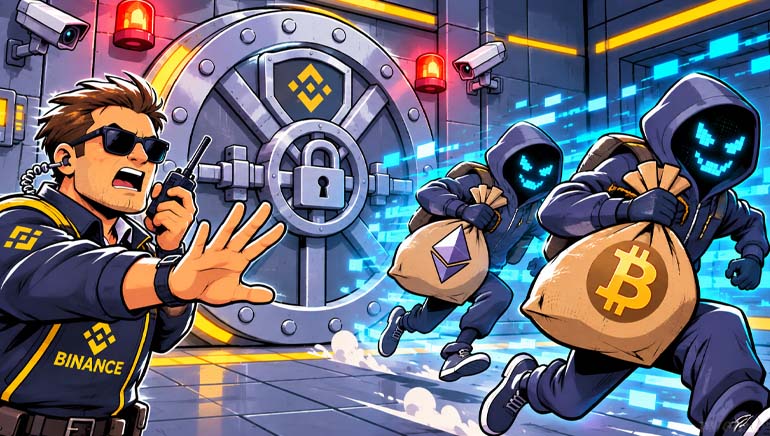
Binance just got hit for $6.3 billion. We examine whether it was a North Korean-sanctioned heist or a calculated move to crash the market so insiders could buy cheap cryptocurrencies during the dip.
It has been a wild time for the cryptocurrency sector recently. We have barely recovered from the drama around the Ledger wallet hacks, and now our timelines are flooded with the news of a historic $6.3 billion breach at Binance!
As crypto casino enthusiasts, this naturally set off alarm bells, as Binance is the world’s largest cryptocurrency exchange, with a global customer base numbering in the hundreds of millions.
With a reported haul more than four times the $1.5 billion stolen in the 2025 Bybit exchange hack, a social engineering operation worthy of an Ocean's 11-style movie script, and North Korea potentially at the centre of it all, we had to dig a little deeper.
Piecing together reports from Binance, Reuters, and the Federal Bureau of Investigation (FBI), you find that a North Korean hacker group called TraderTraitor ran a coordinated campaign on October 29, 2026, which saw them drain just over $6.3 billion in crypto assets.
According to the official FBI notice and on-chain analyses, the breach (which saw the bulk of activity unfold over 20 to 30 minutes) involved 628 attacker addresses draining 17 Binance hot wallets across 9 to 10 blockchains.
The majority of these were Ethereum wallets, where outflow reached around $3,8 billion. Bitcoin wallets account for a further $1.58 billion in outflow, and the balance was made up of Tron, XRP, Solana, and other smaller tokens.
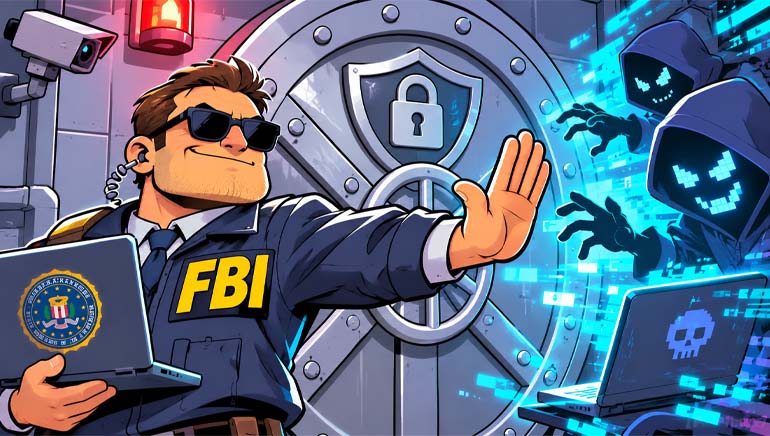
To their credit, Binance acted swiftly, limiting the damage by halting the outflow by putting a temporary block on withdrawals.
The exchange managed to secure nearly $3 billion in breached assets by freezing the transfers of stablecoins like USDT and USDC. This was only possible because of the centralised nature of these tokens, raising the question of their use as security tokens moving forward.
While a breach of this magnitude should be a PR nightmare, Binance did the one thing that put them in a positive light - they took full responsibility, immediately advising their users that the company would eat all losses.
To date, Binance has leveraged its SAFU (Secure Asset Fund for Users) resources and has replaced approximately 98% of the unrecoverable assets by purchasing replacement tokens for the affected users.
As the largest volume-producing crypto exchange on the planet, Binance is well aware that it is a natural target for greedy hackers. Which is why the company invests heavily in its technology and human assets to ensure it is as secure as possible.
That being said, both this breach and the 2025 Bybit breach have been tied to the state-sponsored North Korean cyber-hacking unit known as TraderTraitor.
This group is known to be part of a network of hackers and dark web demons, called the Lazarus Group. The belief is that this group is used by the North Korean government to breach global cryptocurrency, decentralised finance (DeFi), and blockchain platforms to fund its state and weapons programs.
Brute force attacks on an institution like Binance would simply raise alarms and force a lockdown, which is why the hacker cabal seemingly chose a slower and more measured approach.
Binance described the build-up as a "sophisticated, multi-stage campaign", with activity traced as far back as June 2026. Using social engineering and phishing, the attackers targeted employees through fake job interviews advertised on legitimate recruitment sites and interactions through social media.
These methods allowed them to gain access to developer machines and ultimately compromise an important internal AI development tool, which was the starting point for the attack on the 29th.
In addition to reiterating their use of SAFU to protect user funds, the market-leading exchange has already taken the following actions:
The above was what they believed necessary to ensure that the most recent breach was contained and that no malicious code existed or backdoors were left ajar that would allow for an easy repeat of the breach.
Binance has also committed to taking the following steps to enhance its ability to repel future attacks:
Most importantly, they have committed to remaining open and transparent about what is happening behind the scenes, promising to “proactively share information as and when we have it”.
What is that old media adage? Never let a good crisis go to waste.
Almost as soon as news of the breach broke, conspiracy theories began circulating that the attack was designed to trigger panic selling, allowing bigger players to scoop up cheap tokens.
Supporters pointed to roughly $1.5 billion in crypto futures liquidations within 24 hours of the news breaking. However, while BTC and ETH dropped around 4% to 6%, the dip was short-lived. BNB, Binance's own token, took the hardest hit, falling as much as 8%.
Prices stabilised relatively quickly after Binance confirmed it would cover all losses.
The reality for anyone looking to invest in or gamble online with crypto is that the criminals are advancing in step with the technology. This means that while no solution is going to be perfect, we will be offered solutions that meet our individual needs and preferences.
Consider the following when deciding what to do next:
At the end of the day, security often means sacrificing convenience. The ideal solution for you is the one that offers a balanced approach to safety, security, and access.
 Approved
 Hot


 Blackjack
 Slots
 Roulette
 Baccarat
 Craps
 Poker