
With suma urgencia, Chile is fast‑tracking legislation to bring offshore online betting into a regulated domestic framework. Key measures include corporate localization, a reformed Superintendency with monitoring powers, a national self‑exclusion register, and fiscal measures to fund prevention and sports programs. The law’s practical impact will hinge on technical enforcement and payment‑system cooperation.
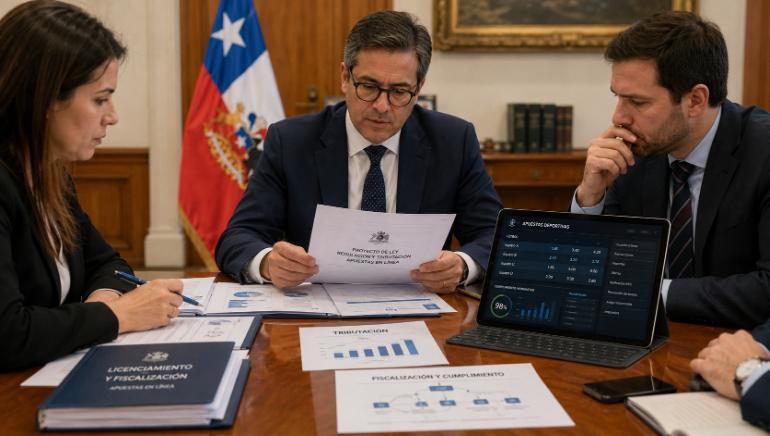
Chile has fast‑tracked a bill to regulate and tax online betting, giving it a “suma urgencia” designation, and forcing Senate debate within 15 days. This proposal would create a licensing regime, a strengthened regulator with real‑time oversight, and a heavy tax and compliance framework. The executive’s decision to grant suma urgencia accelerates Bill 14838‑03 into a 15‑day Senate timetable, pushing a multi‑year project back into rapid legislative review. Under the draft, any online operator would need a general operating licence and must incorporate in Chile as a closed corporation whose exclusive corporate purpose is online betting.
Chile’s current Superintendency of Casinos would be reconstituted as the Superintendency of Casinos, Betting and Games of Chance. It will empowered to grant licences, sanction breaches and demand remote, real‑time access to platforms to monitor bets, payouts and financial flow. Per the draft measure, a 20% tax is imposed on gross gaming revenue for operators, plus VAT and a 1% contribution earmarked for responsible‑gaming programs. Additionally, this draft also contemplates a 15% tax on player winnings at withdrawal and a 2% allocation of sports‑betting income to national federations.
The bill aims to formalize Chile’s market, moving the South American nation from an offshore, largely unregulated online market to a domestic, licenced industry. Of course, this will end up raising compliance costs and favoring operators willing to localize and disclose ownership.
Stronger enforcement tools will come in effect from Chile’s new internet gambling regulation bill. The industry ombudsman will have powers powers to order ISPs and payment providers to block or cut flows to unlicensed platforms. This comes as a response to recent court orders that already sought to block illegal sites.
Additionally, lawmakers are framing the move as both a revenue measure and a public‑health intervention. On top of empowering local communities through direct and auxilliary employment opportunities, the taxes and a National Self‑Exclusion Register (minimum six months) are designed to fund prevention and reduce harm.
Its worth noting however that a strict, high‑tax regime could push players and payments back offshore if enforcement or payment‑blocking is imperfect. On the flip side, a softer transition risks rewarding operators that previously skirted rules. The bill also includes sanctions and a one‑off substitute tax for operators that ran without licences in the prior 12 months. It is reported to be as much as 31% of past gross income, plus criminal and administrative penalties for illegal operation.
All said and done, amendments are still ongoing and will determine the balance between consumer protection, enforceability and fiscal ambition. We expect changes to licensing timelines, the technical scope of real‑time access, payment‑blocking mechanics, and maybe even the size/timing of transitional taxes. Chile’s fast‑track signals a political consensus to regulate and tax online betting. Nontheless, the final law’s effectiveness will depend on technical enforcement, payment‑system cooperation, and how the Senate reconciles revenue goals with practical compliance burdens.


 Blackjack
 Slots
Slots Roulette
 Baccarat
 Craps
Craps Poker
Poker