In recent weeks, we have seen increased pressure on exchanges and custodial wallet users to expose the private information of private wallet users. Could this drive to abolish crypto anonymity cause a digital civil war between purists and profiteers?
Recent decisions by cryptocurrency exchanges to work with governments to enforce the unveiling of private crypto wallet users or even cease supporting these wallets could be a tipping point for the crypto sector.
These recent actions highlight the necessity to protect crypto privacy and raise the question of whether the crypto gambling industry is ready for licensing and regulation or if it should stay "in the grey" for a while longer.
If you are interested in gambling online with cryptocurrency, you may have come across discussions that use the following terms:
According to the online security and privacy protection website Brave, the provider of a security-driven browser and other tools, the difference between Custodial and Non-Custodial wallets is:
“… who controls the private keys. With a self-custody wallet, you manage your private keys (with the help of a trusted wallet provider), meaning you have complete control of your assets. With custodial wallets, meanwhile, a third party (like a centralised exchange or CEX) controls your private keys and, therefore, has custody of your crypto.”
The phrase “not your keys, not your money” is often used to simplify the distinction between the two wallet types.
Custodial wallets are similar to web wallets like Neteller or Skrill, where you put money into their ecosystem using your credit card or direct bank deposit. However, they do business in your country under an agreement with your government, which means your transfers, deposits, and withdrawals are all available to your local tax authority.
Self-custody wallets are secure lockers on the blockchain that only you have the access keys for. There are wallets like Exodus that provide an interface for you to use, but they never request any private information to set you up and allow VPN access so you can protect your location.
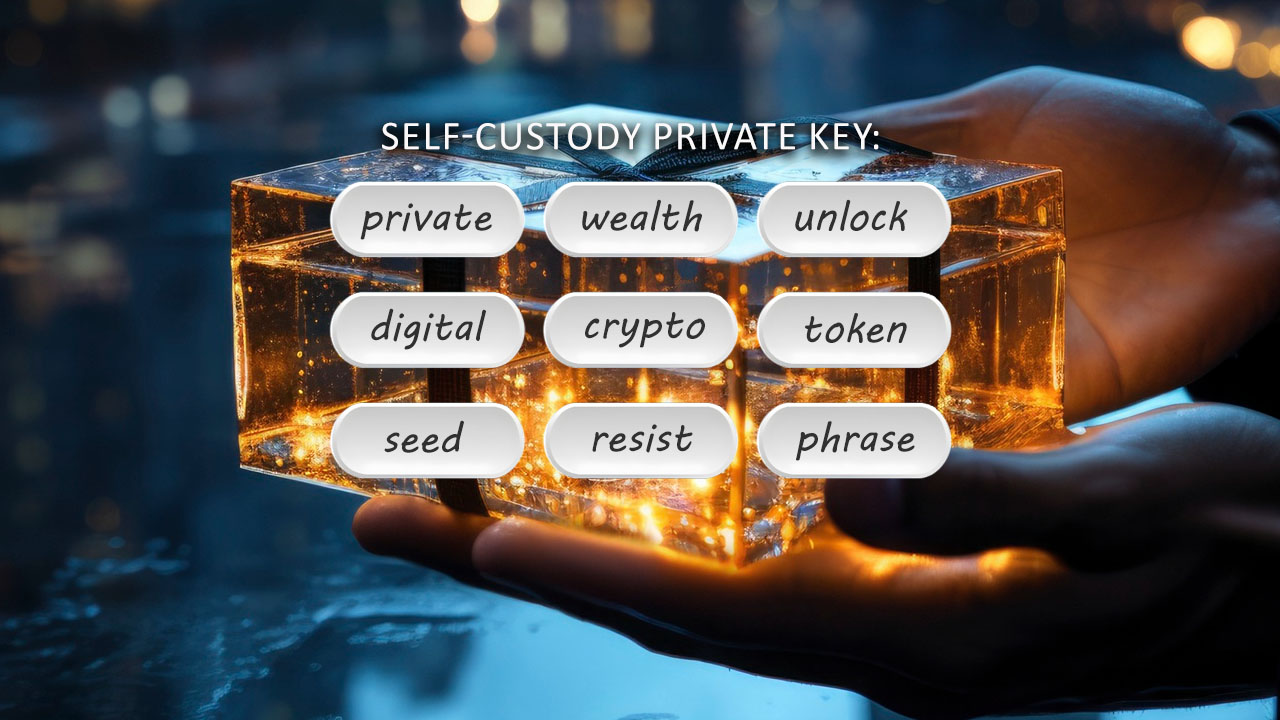
In a recent move that shocked the crypto casino and cryptocurrency investment communities, two popular exchanges announced that they would no longer be protecting the privacy or right to transact of self-custody wallet users.
US-based exchange Kraken alerted its UK users that the custodial account holders must now provide the personal information of the self-custody wallet users they engage with on the platform. Failure to do so will result in the custodial account and its digital assets being seized.
Cryptoslate lead analyst James Van Straten posted his email receipt as proof that this is not a poorly time April Fool prank:
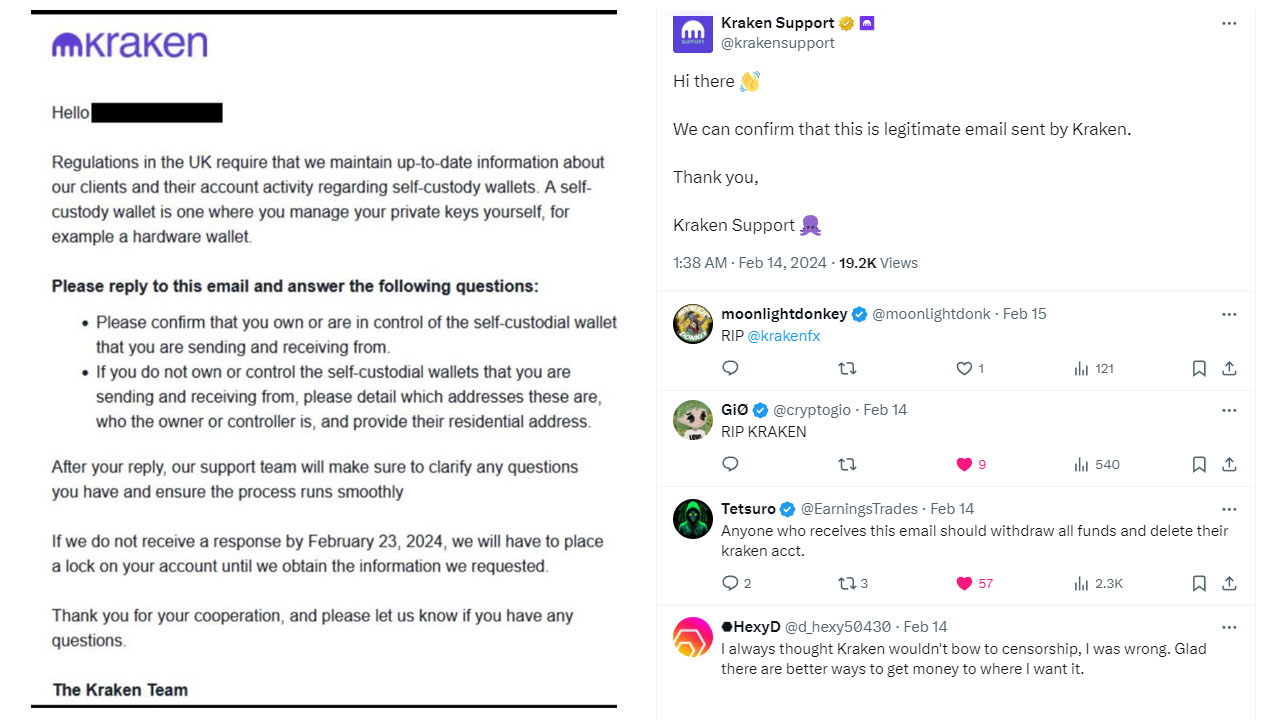
He completes the string by sharing a reply from the official Kraken account verifying that they are indeed the source of the requests.
According to the available information, the data request is a required part of the UK's AML (anti-money laundering) and proof of income laws. It is worth noting that licensed online gambling companies must comply with the exact data requirements, which makes the region a standout anti-crypto gambling market as it aims to destroy the foundation of privacy and self-determination that underpins the entire ethos of the crypto sector.
Coinbase users were shocked earlier this month as it announced that it would no longer support Bitcoin casino payments from self-custody wallets worldwide.
While Lauren Dowling, the product lead for Coinbase Commerce, took social media to defend the decision, it has not gone unnoticed that it is specifically self-custody transactions that are no longer supported.
Reputable Bitcoin journalist and evangelist @JoeNakamoto on X.com challenged Dowling’s position, saying:
“Hey Lauren, interesting to read this. I’ve used lightning to pay for stuff from merchants all around the world … from El Salvador to Cape Verde to Peru to Cuba to Ghana. I've also seen crypto payments the world over. The route forward is not an "open on-chain payments protocol leveraging smart contracts and other EVM tools. - Please switch your focus to bitcoin L2s, not dodgy crypto solutions.”
Regardless of their public reasons, as an exchange that ranks #2 on BitDegree Exchange Tracker with nearly 100 registered million users, the decision to no longer process self-custody wallet transactions will have a notable impact on the market.
On the surface, the need to track anonymous cryptocurrency wallets seems logical, even applaudable. Online gambling regulators and government bodies cite the dangers of the dark web and how Bitcoin and other cryptocurrencies are used to fund criminal enterprise, and casinos are used as a way to clean the money.
However, not much is being done to address the dark web and the illicit trade being funnelled through it, despite ethical hackers and online specialists discussing how simple it would be for government-funded organisations to make a meaningful impact.
Occam’s Razor is a problem-solving theory that says:
“In philosophy, Occam's razor is the problem-solving principle that recommends searching for explanations constructed with the smallest possible set of elements.”
In layperson's terms, when competing concepts exist, the simplest will most likely be the correct one. In this case, it is more likely that local governments are pushing to expose self-custody ownership as a way to increase tax-based revenues.
Since all blockchain transactions are available on the public ledger, it is easy to calculate the total value of a wallet. Should that wallet owner be proven to fall into a specific country's tax system, they will be penalised accordingly.

A common concern in the online gambling space is the ongoing denial of licensing for crypto gambling sites while casino software developers are licensed to create crypto casino games.
However, if more governments require wallets and exchanges to uncover the names, addresses, and other personal information related to self-custody wallets, it might be best to avoid regulation and continue to operate in the grey for the foreseeable future.
The fact that established crypto casinos will not be licensed by prominent gambling jurisdictions could be a good thing in the long run. While it has limited the ability to interact with local ad platforms and banking institutions, it has also meant that they have supported consumer privacy, which is one of the pillars of the blockchain, and the use of cryptocurrencies to secure and manage personal wealth.
Once a crypto casino operates under the same restrictions as a fiat casino, it loses its unique selling point and becomes ‘just another’ gambling site.
The question facing the crypto gambling sector is if it is willing to trade its core values for the chance to make more money in the short term.
Tags
crypto gambling cryptocurrency casinos bitcoin casino gambling license self-custody wallet custodial wallet


 Blackjack
 Slots
Slots Roulette
 Baccarat
 Craps
Craps Poker
Poker