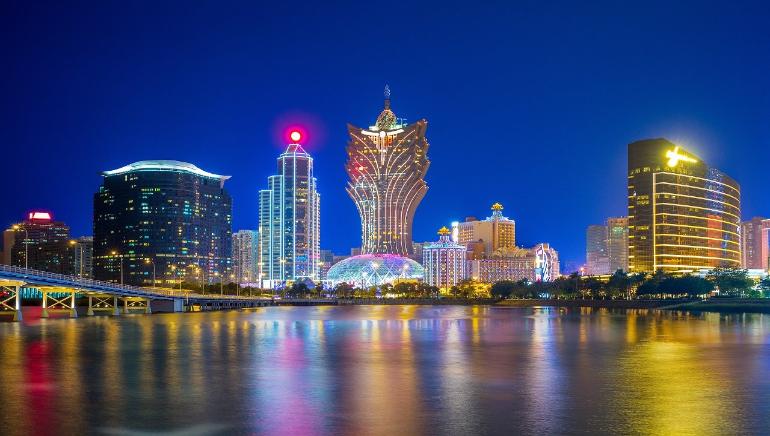
The government of Macau has moved to extend its tax waiver for gambling proceeds collected by licensed gaming concessionaires to the end of 2027. According to the leadership of China’s Special Administrative Region (SAR), this tax exemption has been prolonged for the sake of public interest.
Once again, the Macau government has exempted its six gaming concessionaires from paying complementary income tax from their gambling operation profits. The move was announced via an executive order signed by the Gaming Hub’s Chief Executive Ho Lat Seng, and will cover the period from January 1st, 2023, to December 31st, 2027.
Multinational tax organization PwC has said that the complementary tax is pegged on the worldwide income of any Macau-registered organization without a waiver. The latest move by the Macau government coincides with the current gaming concessions, which took effect on January 1st last year. These concessions will run for the next nine years, cumulatively adding up to the ten years as had been gazette by the government.
The tax-free threshold was also upped to 600,000 patacas (~$74,600) from just 32,000 patacas (~$3,970) for the 2024 financial year, and any proceeds above that are subjected to a 12% levy. Macau’s gaming law gives the Chief Executive exclusive powers to waive taxes for gaming concessionaires plying their trade in the Chinese Special Administrative Region (SAR).
Article 28 of the same Macau gaming law also states that concessionaires are subject to duties, fees, and handling charges besides paying special gaming taxes. The same law also holds that the Chief Executive’s exemption of taxes must be undertaken in the public’s best interests. Be that as it may, this law clause neglects to elaborate on what the term “public interest” means on a broader spectrum.
The tax waiver on gaming profits is a relief for Macau gaming concessionaires who were not so happy with the government’s requirements as part of its broader diversification development needs.
Before renewing gaming licenses, Macau’s government required all gaming concessionaires to submit a detailed blueprint of their plans in the SAR. This came on the back of the government’s earlier postponement of its economic diversification arrangement, with sources saying that the Chinese SAR wasn’t entirely impressed with the proposals tabled by operators. As such, a stalemate was reached between the Macau government and the concessionaires.
That’s because the Macau government demanded the operators submit strong evidence that their plans would be crucial to four crucial industries in Macau. The said industries are sci-tech research and high-end manufacturing, traditional Chinese medicine, MICE (Meetings, Incentives, Conferences, and Exhibitions), and modern finance.
According to well-placed sources in the Macau government, the previous submissions by the concessionaires were not fully committed to these vital economic pillars of Macau. For instance, no submission touched on the traditional Chinese Medicine-related industry.
According to a report released by Macau’s Financial Services Bureau, a total of MOP59 billion ($7.35 billion) in taxes was collected from the gaming operators in Macau for the first 11 months of 2023. This represents a sporadic rise of almost triple what was reported in 2022 when Macau was still reeling from the aftereffects of the COVID-19 pandemic. Areas under Chinese jurisdiction, like Macau, especially felt the negative impact of the pandemic, as they were subject to some of the most stringent pandemic restrictions in the world.
This tally translates to 76.4% of Macau’s total current revenue of MOP 77.2 billion ($9.6 billion, a figure that will be enough to cover the City’s total current expenditure, which sits at MOP 75.3 billion (~$9.3 billion). Having been hit hard by the pandemic, this SAR, whose economy majorly depends on gambling, has made a remarkable recovery. For the first time since April 2020, the revenue generated from gambling will cover all its expenditure needs.
Bearing in mind that MOP 10.3 billion (~1.28 billion) was moved from the fiscal reserve as “other capital revenues,” Macau’s government said it recorded a surplus of MOP 12.3 billion (~$75.8 million) by the end of November 2023.
Under current regulations, each concessionaire is required to pay the local government a fixed annual premium worth MOP 30 million (~$3.72 million). The taxes also include a variable annual premium, which will be based on each concessionaire’s gaming catalog. The specific charges in this regard include MOP 300,000 (~$37,300) for each VIP gaming table, MOP 150,000 (~$18,600) for each mass-market gaming table, and MOP 1000 (~$124) for each gaming machine.
Additionally, operators must pay an extra special premium if the annual GGR emanating from individual gaming tables and gaming machines falls below MOP 7 million (~$870,000) and MOP 300,000 (~$37,300), respectively.
Early 2024 projections for Macau’s gaming sector indicate that it will be a pretty good year for the Chinese SAR. Citigroup, a leading investment company, has upwardly revised its 2024 outlook for gaming revenue in Macau. According to the investment company, Macau’s Gross Gaming Revenue (GGR) is set to fall in the region of MOP 231.3 billion (~$29 billion).
The upward revision was attributed to the region’s excellent gaming performance in January, which has, in fact, surprised many analysts. Macau’s GGR for January was around MOP 19.34 billion (~$2.4 billion), which is up a whopping 67% compared to January 2023’s figures.
The January spur has, of course, been attributed to the no-show of the previously prevalent pre-Chinese New Year slowdown. The Enhypen Concerts held at the Galaxy Arena have also been attributed to the tourists going on a spending spree in Macau’s casino establishments.
So, should Citigroup’s projection of the entire year be realized, the Macau gaming industry will have registered a 79% recovery to the pre-pandemic times when gaming in the country was at its peak. Citigroup analysts also predict a rise in the GGR figure for Macau this February. Meanwhile, the Macau government has set its 2024 GGR target at MOP 216 billion (~$26.8 billion), and from the look of things, this is an achievable target.


 Blackjack
 Slots
Slots Roulette
 Baccarat
 Craps
Craps Poker
Poker