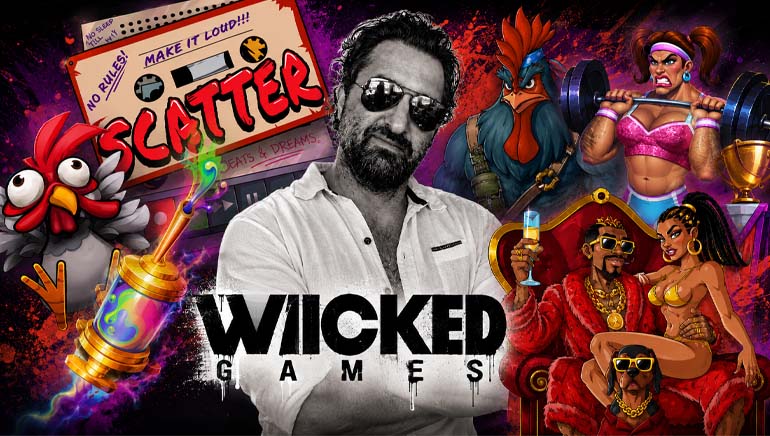
Join us as Karl von Brockdorff, Head of Brand at Wicked Games, reveals why the studio embraces darker themes and provocative game design, and how that approach captures the attention of both players and operators.
We sat down with Wicked Games Head of Brand Karl von Brockdorff to explore what drives one of the industry's boldest game studios and discover the thinking behind its provocative approach to game design.
Join us to learn more about their approach to provocative game design, what it takes to unleash your creative beast in an industry that often prefers to play it safe, and which of their standout games you should play next.
"Games That Slap" is our way of saying a game should make an impression.
You should know what you’re getting within the first few seconds. Strong themes, recognisable characters, and features that show up often enough to matter, and enough volatility that a bonus round can genuinely change the outcome of a session.
Most importantly, the game shouldn’t feel like something you’ve already played twenty times before.
Whether it’s a Signature title like Big Black Cock or a more accessible Core or Classic release, the goal is the same: give players a reason to remember the game after they’ve closed it.
Because safe is crowded.
If you’re releasing another Egyptian slot with a scarab, a pharaoh and some sticky wilds, you’re competing with hundreds of video slots before the player even clicks on yours.
We decided early on that if we were going to enter an already saturated market, we'd do it with a clear identity.
That doesn’t mean we sit around trying to offend people.
A provocative theme might get somebody’s attention. It won’t get them to play a second time. That’s where the actual game has to do the work.
The theme opens the door. The mechanics, maths and features decide whether players stay.
The ideal Wicked Games player is probably tired of scrolling through a casino lobby and seeing the same game wearing a different costume.
Some players want high-volatility games where a bonus feature can completely change a session. Others prefer something more familiar and steady.
What they all have in common is that they want something they can actually remember afterwards.
If a player can spend twenty minutes in a game and immediately forget it existed, that’s not a game we’re interested in making.
Both.
Some operators get it immediately. Others need a longer conversation. Markets and jurisdictions play a big role. That’s expected.
We’re not trying to make games that appeal to every operator on the planet. We’d rather have a strong identity than become another supplier producing interchangeable content.
What we’ve found is that casino operators might initially arrive with questions about the theme, but they stay for conversations about performance.
An operator might click because of the artwork. They sign because of the numbers.
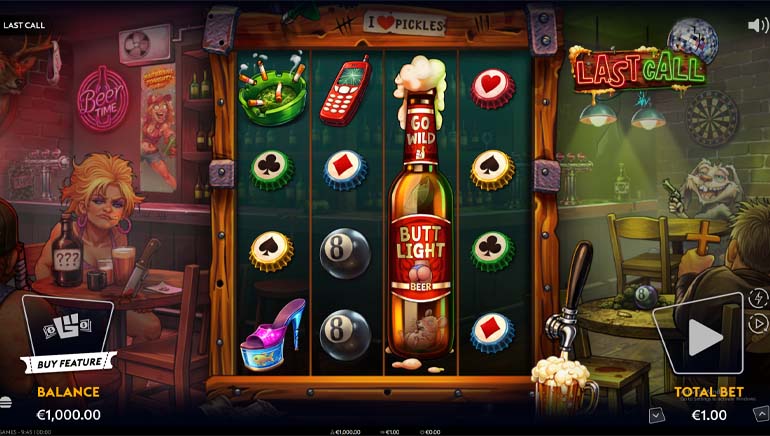
For Last Call, it actually started with the mechanics.
We knew we wanted to build a battle game and had originally developed the concept as part of a collaboration with an MMA sports brand. The core idea was already there: two sides facing off, escalating tension, and players backing a winner.
As development progressed, the collaboration fell through, but we really liked the mechanic and felt it deserved a home of its own. That’s when Last Call was born.
Once we shifted the setting to a rundown desert dive bar, everything started to click into place. The battle mechanic naturally became a bar fight. The fighters became a cast of questionable late-night characters. The growing pots, team selection and back-and-forth action all felt completely at home in that environment.
In most games, the theme and mechanics are introduced to each other somewhere along the way. Last Call was one of those rare projects where they ended up feeling like they were made for each other.
Yes. All the time. Not because we’re offended by the idea, but because timing matters.
There are concepts we’ve explored that felt too niche, too topical, or simply wrong for the moment. That doesn’t mean they’re dead. Most of them end up in a folder somewhere waiting for the right opportunity.
The world changes. Culture changes. Politics changes. What’s relevant today might not be relevant in two years, and vice versa.
So we very rarely throw ideas away completely.
That said, we’re not interested in being controversial for the sake of it. A provocative theme might get attention, but if there’s no strong game underneath it, it’s not worth making.
The best Wicked concepts are the ones where the theme and the mechanics strengthen each other. If either side isn’t pulling its weight, the idea goes back on the shelf until we can find a better version of it.
Possibly. But we’re comfortable with the fact that not every game is for every player.
It’s a dark comedy about a group of dysfunctional people trapped in a desert dive bar making increasingly bad decisions, not an advert for alcoholism by any means.
The joke is on the characters. We also think there’s a tendency to confuse theme with responsibility.
Whether a game takes place in a bar, an ancient temple, a pirate ship, or outer space has very little to do with responsible gaming. Transparent mechanics, honest presentation and regulated operation matter far more.
That’s where we think the real conversation belongs.
We started with a simple question: Who is still drinking in this place at three o’clock in the morning?
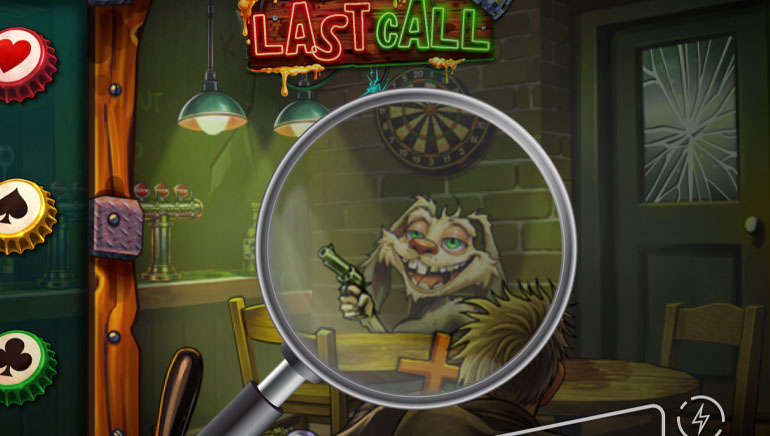
The answers became the cast. An unstable priest. A washed-up Elvis impersonator. A man wearing a tutu. A mechanic carrying a wrench. A bartender who has stopped being surprised by anything. Every character feels like they walked in from a completely different story.
As for the Easter eggs, absolutely. The Overdosed rabbit wasn’t an accident, and players should expect more of that sort of thing moving forward.
We’re slowly building a wider Wicked universe, and some of our characters have a habit of turning up where they probably shouldn’t.
Because they all do different jobs. The Wild Nudges keep the base game active.
The Scatter Re-spins create anticipation and help determine how strong the eventual bonus round will be, and the Bar Fight Bonus is the payoff.
If you remove any one of those layers, the game’s rhythm changes completely.
With a medium-volatility game, you can’t rely on players waiting forever for one huge moment. You need things to happen throughout the session to keep them immersed in the world you’ve created for them.
The Nudges, Re-spins and Bar Fight each contribute something unique and engaging to that experience.
<free spins>
Honestly, once we’d decided the game was set in a desert dive bar full of unstable people, the bonus round practically wrote itself. From a design perspective, a fight is also a surprisingly good framework for a bonus feature. There are sides to choose, clear stakes, momentum swings and an obvious winner at the end.
That allowed us to build the Win Pot, Victory Pot and team selection mechanics around something players instantly understand.
The expanded 4x6 grid was added for the same reason. We wanted the game to physically feel bigger the moment the fight begins.
Everything about the feature is designed to feel like the point where the evening finally gets out of hand.
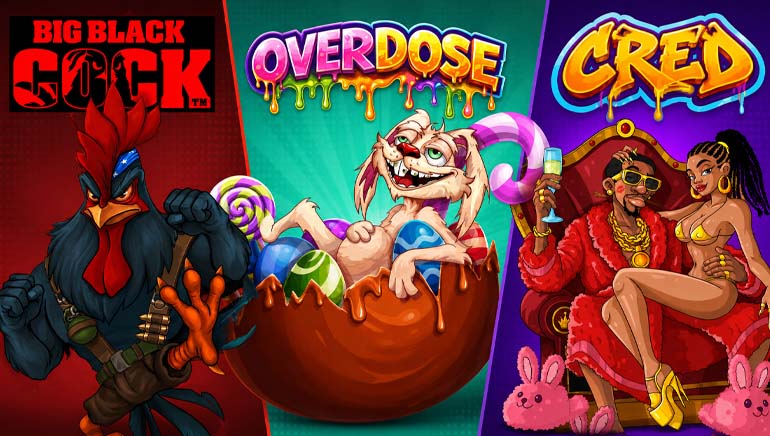
If we had to pick three, we’d go with Big Black Cock, Transformers, and Cred.
Big Black Cock is probably the purest expression of the Wicked Games philosophy. It’s bold, ridiculous, impossible to ignore, and backed up by a feature set designed to deliver genuinely big moments. Whether people love it or hate it, nobody forgets it.
Transformers is interesting for a different reason. The theme will inevitably spark debate, but underneath it sits a very strong game. The climbing multiplier mechanic and sticky progression in the bonus round create a constant sense of momentum. It’s a good example of something we believe strongly as a studio: controversial themes might get attention, but they still need to stand on their own as casino games.
Then there’s Cred. We didn’t set out to reinvent slots with that one. Quite the opposite. We took a style of gameplay players already enjoy, in this case, the Book mechanic, and asked ourselves how we could put an engaging twist on it.
The result is a game that feels familiar enough to be instantly accessible, but with enough twists, progression and mechanical depth to keep players invested.
Sometimes innovation isn’t about throwing everything away and starting over. instead, it’s about taking a proven formula and giving players a fresh way to experience it with a whole new layer.
One pushes boundaries, one sparks debate, and one demonstrates a different side of the studio altogether.
If you're looking for slots that dare to be different, Wicked Games deserves a place on your must-play list. Visit one of our recommended Wicked Games-powered casinos, claim a generous welcome bonus, and experience their bold collection of slots for yourself.


 Blackjack
 Slots
Slots Roulette
 Baccarat
 Craps
Craps Poker
Poker