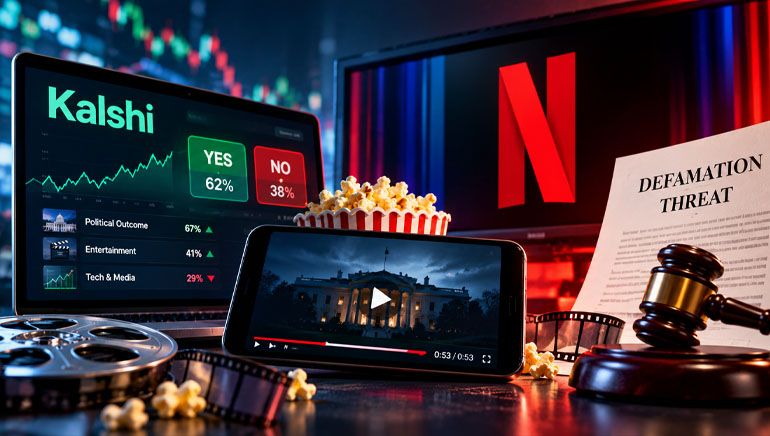
Kalshi took issue with Netflix’s Instadocs: The Prediction Games trailer, arguing that a trading screenshot gave viewers the wrong impression. The dispute raises fresh questions about prediction markets and their legal battles.
A few seconds of documentary footage can cause a surprising amount of trouble. Kalshi found that out in July 2026, when it accused Netflix of misleading viewers in a trailer for Instadocs: The Prediction Games.
Prediction markets are built around one question: what happens next? But when money is on the line, the consequences can reach well beyond the trading screen.
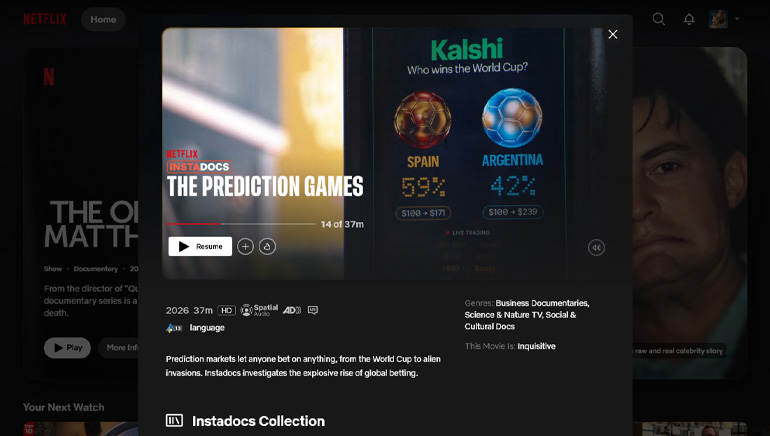
That tension sits at the heart of the Netflix Instadocs documentary: about Kalshi, Polymarket, and the growing market for trading on real-world outcomes.
The film also sparked a dispute of its own. Kalshi threatened Netflix with a defamation claim, arguing that its presentation of a trade in the trailer was misleading. The disagreement touches on a bigger question: where does reporting on betting markets end, and potential reputational harm begin?
Kalshi’s objection centred on footage that appeared to show a $5,000 position on Spain during a Las Vegas World Cup watch party. The company argued that the scene could leave viewers with the impression that someone had traded sports contracts on Kalshi in Nevada in violation of a court order. Kalshi maintained that the screenshot showed an older trade, dated May 16, 2025.
Kalshi accused the streaming service of presenting fabricated documents and false or misleading statements, and demanded that Netflix remove the disputed content within one hour and publish a statement retracting the alleged defamatory material.
In a letter to Lindsey Flavius, Intellectual Property Senior Counsel at Netflix, Kalshi stated:
“The trailer features both fabricated documents and false and misleading statements portraying trades being made on Kalshi in violation of a court order.”
Nevada became central to the trailer dispute because of a court order restricting Kalshi’s event contracts. In March 2026, a state court granted a temporary restraining order against the company, covering sports, elections, and entertainment contracts.
Kalshi challenged Nevada’s authority to enforce those restrictions. On August 28, 2026, the Ninth Circuit largely upheld the dissolution of an early preliminary injunction that had blocked enforcement against Kalshi.
Kalshi also faces other legal challenges, including proceedings involving New York and a proposed consumer class action. While the ruling and legal concerns are separate issues, it still helps explain why a screenshot suggesting a Nevada sports betting trade could become such a sensitive issue.
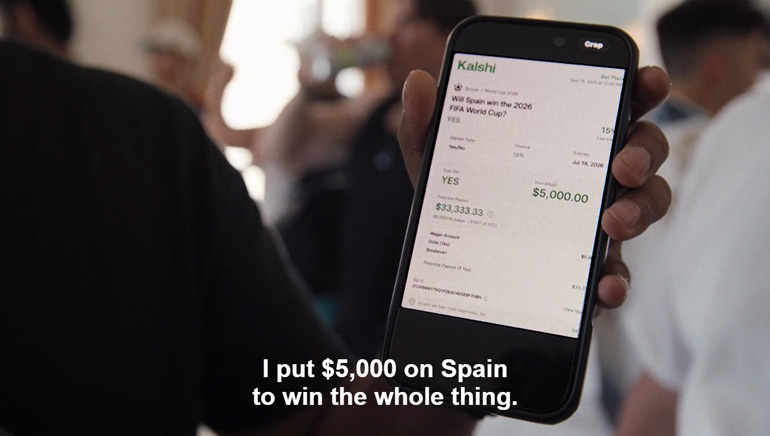
Netflix rejected the allegation that footage in the documentary had been fabricated. The company said that the scene was filmed on July 17, 2026, at a Las Vegas World Cup watch event, where a guest showed the production team a screenshot of an earlier trade.
The disagreement was therefore not simply about whether the scene had been filmed recently. It was about what viewers might conclude from the footage.
Kalshi argued that the trailer created a false impression of activity during a restricted period. Netflix maintained that the clip showed a transaction made before the relevant court order.
Neither position amounts to a judicial finding. The distinction between an allegation and a fact is especially important when the dispute itself concerns the accuracy of a media portrayal.
The documentary is about the rise of prediction markets, and shows how people trade contracts linked to outcomes ranging from sporting events and elections to weather and armed conflict.
Its interviewees include Kalshi CEO Tarek Mansour, Polymarket CEO Sharyne Coplan, Commodity Futures Trading Commission chair Michael Selig, and author James Surowiecki, whose book The Wisdom of Crowds explores how groups can collectively make accurate predictions.
The underlying idea is that market prices can reflect information held by many different people, and as information emerges, traders buy and sell according to their expectations, helping prices shift.
Prediction markets occupy an unusual space between financial trading, forecasting, and online gambling. Their supporters argue that they can turn scattered information into useful signals. Critics worry about incentives that could encourage manipulation or reward access to information unavailable to the public.
The trailer dispute adds a media question to that debate. If a short clip strips away important context, viewers may misunderstand what happened. But a company challenging an unflattering portrayal must also establish that the material meets the relevant legal standard for defamation.
Kalshi’s letter said that the disputed statements threatened its legal position in litigation important to its business. However, the allegation alone does not establish that Netflix defamed the company.
A successful defamation claim generally requires proof of a false statement that caused legally recognised harm, subject to the rules governing the case. The context of the footage, its overall impression, and the evidence supporting each company’s account would all matter.
The reported dispute that began with a cease-and-desist letter has not resulted in a court complaint. As of October 15, 2026, there has reportedly not been a lawsuit filed against Netflix.
The documentary premiered on July 26, 2026, as scheduled. Reports at the time indicated that the trailer remained online. No settlement or court-ordered payment had been reported either. Kalshi’s published demands were to remove the disputed content and issue a retraction, not a dollar amount.
The companies could resolve the matter privately, or Kalshi could decide to pursue legal action. Without confirmation, neither outcome should be treated as fact.
A 53-second trailer became the centre of a dispute over context, credibility, and the risks surrounding prediction markets. Kalshi argued that Netflix presented trading activity in a misleading way. Netflix has defended the footage, and the claims remain untested.
For now, this is a threatened legal claim of alleged defamation, not a filed lawsuit. Any further developments will depend on whether the companies can reach an agreement or take the dispute to court.


 Blackjack
 Slots
 Roulette
 Baccarat
 Craps
 Poker