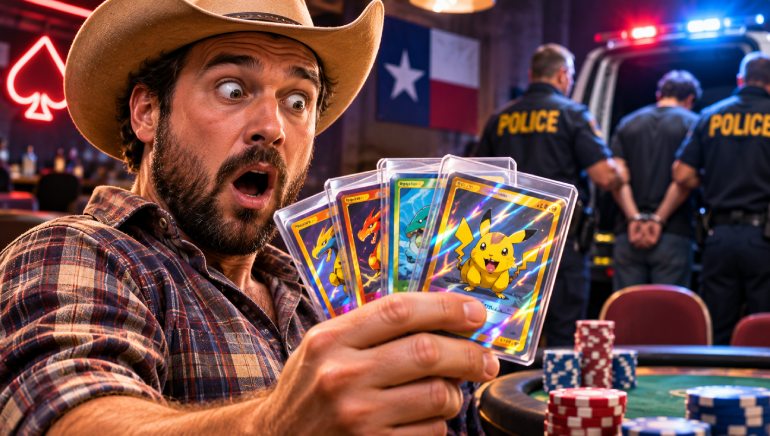
Seven illegal gambling businesses in San Antonio allegedly used Pokémon and sports trading cards instead of cash to bypass Texas gambling laws. The case highlights the growing value of collectables and the limits of unconventional payouts.
Trading cards have come a long way from the days when children swapped them in school playgrounds. Some Pokémon and sports cards now sell for thousands of dollars, while particularly rare examples have attracted million-dollar price tags.
In San Antonio, Texas, authorities say this growing market was put to an unusual use: paying gambling winners without handing them cash. This incident has raised questions about gambling regulations, the growing value of collectables, and how businesses try to find loopholes in the law.
On 4 November 2026, the Bexar County Sheriff’s Office raided seven businesses suspected of running illegal gambling operations. The businesses reportedly operated under the name “777” and housed hundreds of gambling machines.
According to Sheriff Javier Salazar, authorities seized more than 500 gambling machines, along with an undisclosed amount of money. A total of 23 people were taken into custody, with 13 facing charges connected to promoting gambling and drug possession.
The investigation also uncovered an unusual payment arrangement. Rather than handing winners cash prizes, some of the businesses allegedly rewarded them with valuable Pokémon and sports trading cards.
One location reportedly had a trading card business operating right next door. Winners could take their cards there and sell them for cash, effectively turning their prizes into money.
Salazar said the arrangement was an attempt to get around Texas gambling restrictions. However, he stressed that using the collectables instead of cash did not make the operations legal.

The choice of using trading cards was not entirely random. Collectables have developed into a substantial market, with certain rare cards selling for thousands or even millions of dollars.
The Pokémon game, in particular, has attracted collectors and investors looking for limited editions, rare illustrations, and cards in excellent condition. Some high-profile sales have reached extraordinary prices.
Sports cards have a similar appeal. Rare rookie cards, limited releases, and signed editions can fetch significant sums, depending on the athlete, condition, and demand.
A gambling machine might award a player a valuable collectable instead of a monetary payout. If a nearby shop is willing to buy that item, the player can exchange it for money shortly afterwards.
In the San Antonio case, authorities alleged that the arrangement was deliberately structured to work around gambling restrictions. The proximity of the trading card businesses also raised questions about how closely the different operations were connected.
However, the underlying transaction remains important. A prize does not automatically become legal simply because it is paid in a different form.
Like the idea of gambling with high-value assets? Our top crypto casinos offer generous bonuses, progressive jackpots, and world-class VIP services.
Texas has relatively strict gambling laws, although certain activities and prize-based games are permitted under specific conditions.
One relevant exception covers certain amusement games offering non-cash prizes. Under Texas law, these prizes must have a wholesale value no greater than 10 times the amount charged to play. For example, if a game costs $2 to play, the wholesale value of an eligible prize cannot exceed $20.
This distinction matters because not every prize is treated equally. A low-value novelty item awarded through an amusement game is different from a valuable collectable handed to someone who has effectively won money through gambling.
The law also recognises limited exceptions for certain private gambling activities, provided specific conditions are met.
The alleged San Antonio arrangement appears to have gone beyond the ordinary use of amusement prizes. If collectables were deliberately used as substitutes for cash winnings, the authorities could still treat the activities as illegal gambling.
Under Texas law, gambling is generally a Class C misdemeanour, while promoting gambling can carry more serious penalties. A Class A misdemeanour conviction for gambling promotion can result in fines of up to $4,000 and as much as one year in jail.
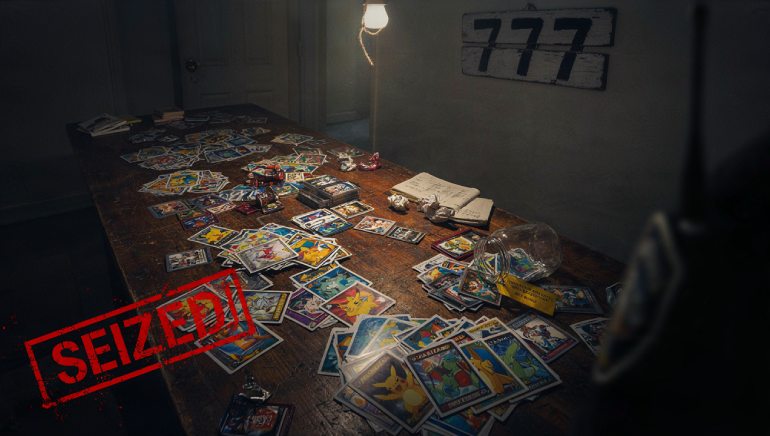
The San Antonio investigation also puts the spotlight on a market that has changed considerably over the years. Pokémon was created as a trading card game, but collecting rather than playing turned out to be the most lucrative market.
Today, some buyers are prepared to spend substantial amounts on cards they may never use in a game. Rarity, condition, demand, and professional grading can all influence a card’s value. Two cards featuring the same character can have very different price tags depending on their edition and condition.
Sports cards follow much of the same pattern. Depending on the condition, demand, and type, sports cards can range from a few cents to over $12 million. Pokémon cards can price from as low as $1 to over $16 million.
Learn more about the in-game collectables and Metaverse rewards provided by Aviatrix Loot Boxes.
The key issue in this case is not whether a gambling business pays winners in cash, cards, or something else. It is what is happening behind the transaction.
If customers pay to play games of chance and receive valuable prizes in return, the use of merchandise does not automatically take the activity outside gambling legislation.
The San Antonio raids also raise questions about the role of neighbouring businesses. A separate shop buying cards might appear to be an ordinary retail operation, but its proximity to a gambling venue becomes relevant when investigators suspect that prizes are being converted into cash as part of the same arrangement.
The investigation is a reminder that changing the way winnings are handed over does not necessarily change the legal nature of real-money casino gambling. Pokémon and sports cards may be worth far more than they once were, but their growing value does not make them a loophole in Texas gambling law.
Tags
illegal gambling underground casino texas gambling law pokemon cards sports trading cards casino games


 Blackjack
 Slots
 Roulette
 Baccarat
 Craps
 Poker