Social media’s reach is undeniable, but it comes with risks. Discover how misleading advice on TikTok and Kick.com is shaping crypto and gambling trends—and why trusted, expert resources are crucial for informed decisions.
We know that authority sites that invest time and money in creating unbiased reviews and guides will also be the best resources for insights into online casinos, crypto gambling, and cryptocurrency investment.
The reality, however, is that a growing number of young adults who have grown up using social media apps are seeking advice on which casinos to join and which digital assets to invest in from entertainment platforms like TikTok and streaming sites like Kick.com.
Join us as we delve into some of the dangers this presents and an eye-opening report by cryptocurrency news and research portal CryptoNinjas on how much of this advice is blatantly false or misleading.
The pandemic lockdowns drove incredible growth in many online industries. One of the sectors that saw the most significant increase in viewership was video game streaming on Twitch.TV and the Stake Casino funded platform Kick.com.
As online gambling grew in mainstream appeal thanks to increasing licensing and regulation, these content creators grabbed the attention of legal and unlicensed gambling providers, who saw them as a chance to extend their reach around the globe.
This resulted in high-demand streamers being paid millions of dollars to either switch from their preferred video games to become full-time gambling streamers or, at the very least, integrate specific gambling streams and content segments into their weekly schedules.
In the United States, in particular, this led to streamers with millions of followers promoting CS:GO skin gambling sites and unscrupulous crypto casinos. These sites promoted using VPNs to bypass local laws, offered massive bonuses and promotions with near impossible-to-complete playthrough requirements, and, most importantly, paid little mind to responsible gambling requirements like age verification, deposit limits, and at-risk player support.
The same pattern of personality-driven reach holds true for social media platforms like TikTok, where a 30-second viral clip can reach tens of millions of viewers in hours.
ExplodingTopics.com shared their findings for the 2024 reach of the top three platforms among Gen Z users (born 1996 to 2010):
These mobile-device-focused platforms are incredibly popular with younger audiences due to their ease of access and perceived privacy. Younger audiences tend to see popular figures as trustworthy and worth seeking advice from. However, this can be a dangerous position when the influencer's recommendations are based on what earns them the most money, not what best serves their audience.
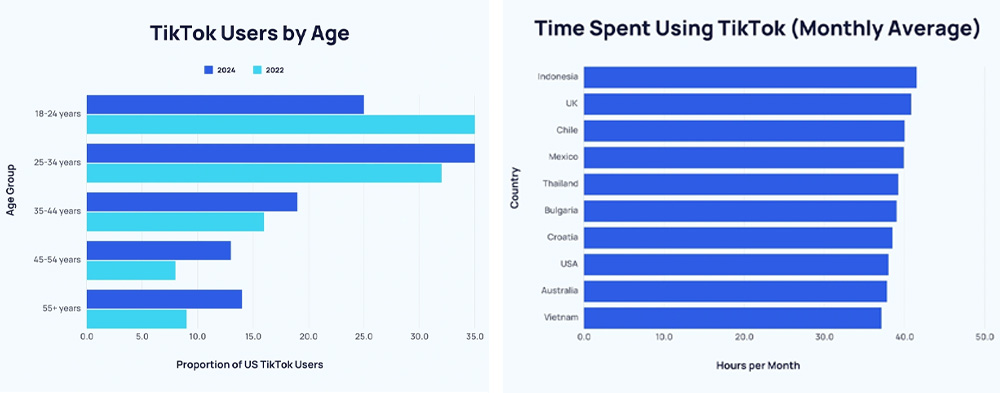
With TikTok's recent legal challenges in the US and its standing as the largest of the youth-oriented social media sites, it is worth digging deeper into their stats.
The 2024 report lists the top ten countries by hours viewed as Indonesia, the UK, Chile, Mexico, Thailand, Bulgaria, Croatia, the USA, Australia, and Vietnam.
Taken at face value, none of these stats are concerning in and of themselves. However, when you realise that it is the confluence of high-risk demographics - primarily males in their early 20s from a large number of low-income or low-opportunity countries - it becomes more apparent how harmful the misinformation they receive about gambling and cryptocurrencies can be.
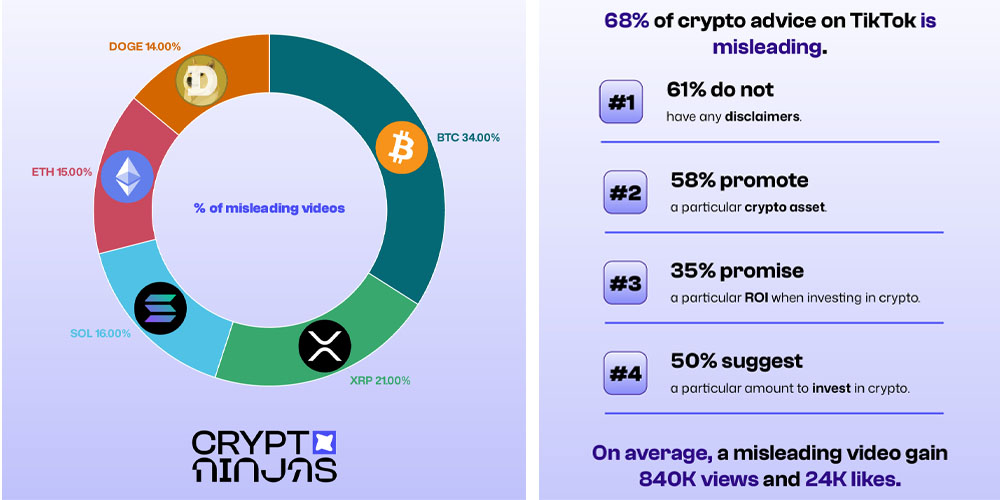
The research team at CryptoNinjas reviewed more than 1,000 high-reach TikTok videos promoting Bitcoin and other cryptocurrencies and evaluated 482 influencers who engaged with the platform's crypto community.
The highlights of the report are:
The report found that influencers focused on self-promotion rather than the best products with proven track records. This included coins they were invested in, paid platforms, and products that held no real value to the customer.
They boasted of unrealistic long-term returns (averaging around 35%) and specified investment amounts, ignoring individual financial constraints. No disclaimers stated that the advice may not be suitable for all viewers.
Promoting a specific token is also frowned upon as it can lead to low-level market manipulation. A trusted source will share how to invest, where what to invest in.
These blatantly misleading videos would get 840,000 views with more than 24,000 likes on average. These engagement figures ensure the TikTok algorithm will promote the creators concerning content with even more unsuspecting viewers.
Early memecoin launched as a protest against crypto-bros who focused exclusively on profiting off Bitcoin, ignoring the blockchain's more significant value.
The report found that 96% of TikTok memecoin promoters upsell the tokens as legitimate and stable, which is inherently false. They also upsell the community aspect and often promote that they are heavily invested in the token as a trust cue.
The sad reality is that as soon as the price spikes, these promoters sell off their holdings for a profit, which causes the coin to bottom out (these scams are known as either "pump and dump" or "rug pull"). This is evident by the fact that more than 80% of TikTok-promoted memecoins are already dead.
Whether you are into crypto trading, games of chance or sports betting, the best advice will always come from websites like ours and other long-standing industry experts who have built a reputation of trustworthiness and transparency.
If you're an avid social media user and get turned on to new products, that's fine. We recommend you seek unbiased reviews from trusted sources before spending money on digital assets or casino bonuses.
 Approved
 Hot
Hot


 Blackjack
 Slots
Slots Roulette
 Baccarat
 Craps
Craps Poker
Poker